WHAT IS ORIHUELA COSTA AND WHAT DOES TORREVIEJA HAVE TO DO WITH IT?
“There are two worlds. The world you understand and the world you don’t.”
Anthony Horowitz, Raven’s Gate
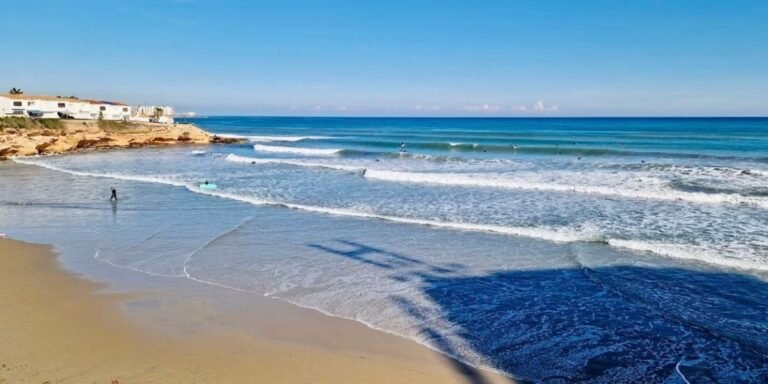
Recently, our agency received the following request for an apartment rental: “A family of three will rent an apartment for the month of August. You are in Torrevieja, right?”
My answer was as follows: “Absolutely not. We are in Orihuela Costa. We do not even have anything to do with Torrevieja.”
My colleague considered my answer rather harsh. In the end, we found these clients an apartment, they had a wonderful holiday and, after their holiday, when they were already leaving, they said: “We popped into Torrevieja for a day. Thank you for not allowing us to stay there back then.”
So why does Orihuela Costa attract people so much that, after travelling the 10 minutes from Torrevieja by car, it feels as though you have entered another world, another country, perhaps paradise on earth?
So, Orihuela Costa is not a separate city and not an independent municipality. It is the coastal part of the huge municipality of Orihuela, stretching along the Mediterranean Sea. Here you will find Punta Prima, Playa Flamenca, La Zenia, Cabo Roig, Campoamor and Mil Palmeras, and further away from the sea there are numerous residential developments, including Villamartin, Lomas de Campoamor and Lomas de Cabo Roig.
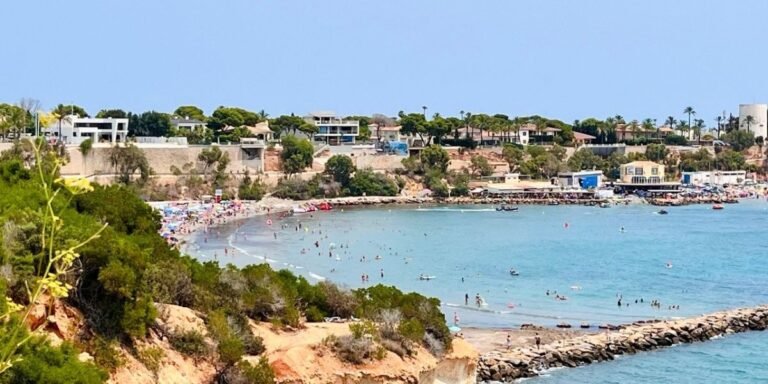
The municipality itself describes its coastline as an approximately 16-kilometre stretch where beaches and small coves alternate. These are tourist beach areas with exceptionally clean Blue Flag sandy beaches and the crystal-clear waters of the Mediterranean Sea. During the season, tourists, rentals, noise, restaurants, cafés, beaches and a little controlled chaos are added to the mix. The result is that very same “gremlin soup”, the ingredients of which nobody really understands, but everyone wants to try.
At the centre of Orihuela Costa is La Zenia Boulevard – an open-air shopping centre. This is the city’s main “attraction”. Since its opening in 2012, the lifeline of Orihuela Costa has permanently changed direction.
All the leading developers immediately formed a queue for any available plot where it was still possible to build something. Spanish retailers – Mercadona, Lidl, Aldi, Consum, DialPrix, Auchan, Carrefour – began opening their shops one after another. And then everything else followed: schools, restaurants, sports centres, beauty salons and dozens of other services.
It seemed as though La Zenia Boulevard had pressed some kind of button, after which the surrounding area began rapidly growing everything necessary for normal life. Moreover, the process turned out to be so fast that sometimes it seemed that all you had to do was open one new facility and, a couple of months later, five more would inevitably appear nearby.
HOW IT ALL BEGAN
Before the 20th century
Historically, the municipality of Orihuela had an unusual feature – a very large territory stretching from the city of Orihuela to the Mediterranean Sea.
Although the city itself is approximately 30–35 km from the coast, all this land had legally belonged to the municipality of Orihuela for many centuries.
1950s–1970s – the birth of Orihuela Costa
During this period, large-scale development of the coast began.
The first major projects:
- 1953 – the first phase of Dehesa de Campoamor;
- 1959 – the beginning of the development of Cabo Roig;
- 1966 – Playa Flamenca;
- 1968 – La Zenia receives the status of a tourist centre of national importance;
- 1968–1969 – Punta Prima;
- then Villamartín, La Regia, Aguamarina, Campoamor Golf and other residential developments appear.
All these projects were approved by the municipality of Orihuela, because the land was already within its administrative boundaries, although the distance from the historic centre of Orihuela to the coast is around 35 km.
For Spain, this is an unusual situation: one municipality includes two completely different worlds:
- the historic city;
- the modern resort coastal area.
Until the 1950s, there were practically no modern settlements here.
There were:
- agricultural land;
- the pine forests of Dehesa de Campoamor;
- individual estates;
- watchtowers;
- small fishing areas.
Then, over several decades, dozens of residential developments appeared.
The name “Orihuela Costa” appeared much later
This is not a separate municipality, but an administrative and tourist name for the coastal part of the municipality of Orihuela.
Legally, the residents of Orihuela Costa are residents of the municipality of Orihuela.
There is an official document of the new General Plan of Orihuela which directly states that:
- Dehesa de Campoamor began to develop in 1953;
- Campoamor and Cabo Roig were already being actively developed from 1959;
- Playa Flamenca – from 1966;
- Punta Prima – from 1969.
In other words, present-day Orihuela Costa did not grow around the old city, but almost entirely thanks to tourist residential developments in the second half of the 20th century.
Incidentally, the history of Orihuela Costa has an even more curious chapter: why did the city of Orihuela retain access to the sea after the Reconquista, while most inland cities in Spain do not have such access?
The history goes back to the 13th–14th centuries and is connected with the borders of the Kingdom of Valencia and the Crown of Castile.
This is one of the most unusual features of the administrative map of Spain.
LOCAL RESIDENTS: THE STORY OF HOW TOURISTS FORGOT TO LEAVE
Even before 2010, the image of Orihuela Costa was much more seasonal: quiet in winter, noticeably livelier in summer, and with many British and other European pensioners among its residents.
But then the region received two powerful impulses: the consequences of the financial crisis and the opening of La Zenia Boulevard in 2012.
And both events, each in its own way, changed not only the property market, but also the social life of the coast.
Why is a financial crisis not always a bad thing?
After the market crash, banks in Spain received huge volumes of housing on their balance sheets.
For a bank, an apartment in which nobody lives is not a romantic home by the sea, but an asset that continues to require money: taxes, utility costs, comunidad and maintenance.
Therefore, during the crisis years, the market saw prices that sound almost fantastical today.
For example, a one-bedroom apartment could be purchased for the price of a car for €30,000.
At that time, many smart Europeans began to think: we are in our forties, we have property in our own country, so perhaps we should buy a little apartment on the Mediterranean coast, so that the years that are supposed to be a time for ourselves would pass not under grey skies and endless rain, but under the warm Spanish sun.
Come here for summer holidays, and rent it out in winter.
After two years of such trips, 60% of families decided not to wait until retirement, but to stay in Orihuela Costa here and now.
School infrastructure grew together with this new population.
In 2020, municipal programmes already included CEIP Los Dolses and the new CEIP Playas de Orihuela among the sites for summer school, as well as the new secondary school Playa Flamenca, which clearly shows how ordinary family life in Orihuela Costa had become: this had long ceased to be an area where only pensioners came for a couple of months.
In 2025, the third infant and primary school opened, while the already legendary CEIP Los Dolses school set a national Spanish record for the number of different nationalities studying at one school – 63 nationalities.
Everyone studies here – English people, Irish people, Argentinians, Belgians, Scots, Welsh people, Dutch people, Venezuelans, French people, Moroccans, Ukrainians, Poles, and even Spaniards.
All pupils speak Spanish and, in addition to learning about the history and culture of their own countries, they are happy to study the culture and history of Spain.
La Zenia Boulevard: the shopping centre that decided to play town planner
And then, in 2012, La Zenia Boulevard opened.
And here the story of Orihuela Costa takes a sharp turn.
On paper, it is a shopping centre.
In reality, it is a huge part of urban life.
Here there are streets, squares, fountains, restaurants, entertainment and more than 150 shops; the Boulevard itself now calls itself the largest shopping centre in the province of Alicante and reports more than 120 million visitors over the years of its operation.
Its opening became something like switching on electricity in a house that had previously been lit by candles.
Around the large commercial centre, it became easier to build not simply individual apartments, but an entire everyday environment: shops, services, restaurants, sports centres, salons, schools.
Not all of these processes started precisely because of the Boulevard, of course, but its appearance clearly strengthened the area’s advertising and made it more noticeable to residents of Europe.
WHAT IS THE APPEAL? THERE ARE NO ATTRACTIONS HERE, BUT EVERYONE WANTS TO LIVE HERE
Let us be honest: if you make a list of “ten things you absolutely must see in Orihuela Costa”, problems will begin fairly quickly.
There is no Sagrada Família in Barcelona here, no Alhambra and no views of Guadalest.
There is the sea.
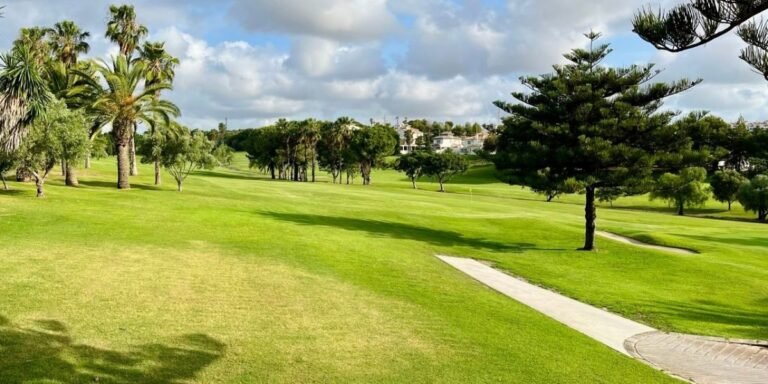
There is golf.
There are restaurants.
There is La Zenia Boulevard.
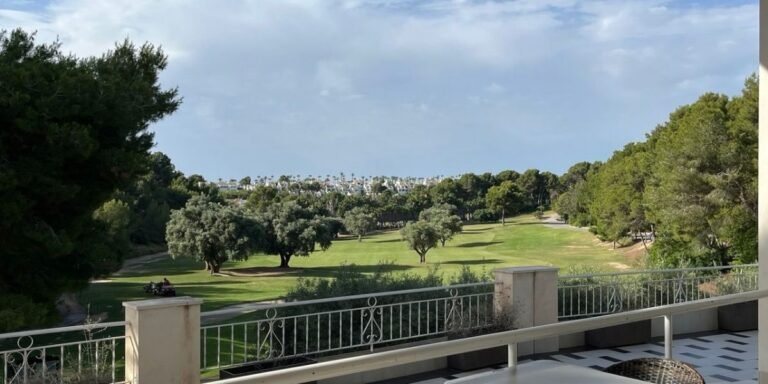
But the main local “attraction” is the very possibility of living a normal life.
And this is where things become most interesting.
A tourist needs experiences.
A person choosing a place to live needs good days that can be repeated.
These are completely different products.
And Orihuela Costa is unexpectedly strong precisely in the second one.
WEATHER, SEA, CLIMATE, AIR, FOOD, PRICES
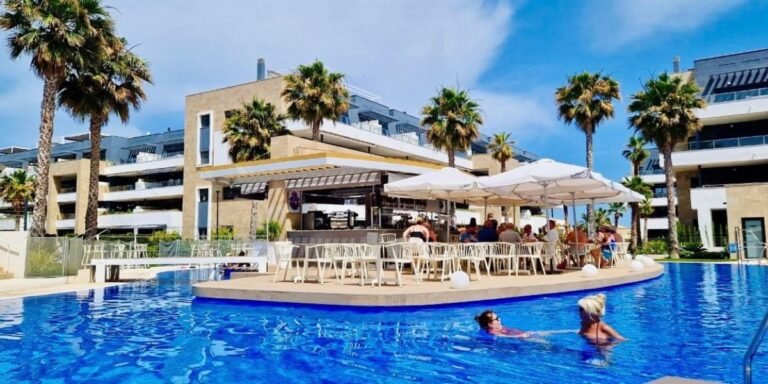
The weather itself does not make a place a home.
But try removing sunny days, the sea and the possibility of going outside without rain from your life, and you will understand how much they mean.
The municipality states that Orihuela Costa has around 16 kilometres of coastline, clear waters, sandy beaches and a climate with more than 300 sunny days a year.
The figures are important, but in real life something else is more important: the sun here does not seem like a rare guest whom you have to photograph before Monday.
Add fresh produce, familiar European infrastructure, restaurants for every occasion and the possibility of living by the sea without feeling as though you have settled in scenery designed exclusively for holidays.
As a result, something appears that is difficult to fit into an advertising brochure: everyday life becomes pleasant.
FREE PARKING AND PLENTY OF PARKING SPACES
The Swedes asked: “How much does parking cost?”
The answer was astonishing:
“FREE.”
How is that?
EVERYWHERE?
– Yes, everywhere.
It is difficult to believe, especially for residents of European places, but in Orihuela Costa there are always parking spaces everywhere and they are all completely free.
Now try living with that fact in your London, or there is another option: :)))
LIFESTYLE. A COMMUNITY OF NEW AND FREE PEOPLE

Perhaps this is where the main reason for the attractiveness of Orihuela Costa is hidden.
Not in the beach and not even in the weather.
In the people.
Here, British people, Irish people, Spaniards, Belgians, Dutch people, French people, Poles, Scandinavians, Ukrainians and many others live next to one another.
But more important than the national composition is another common feature: a significant part of these people came here not for a career breakthrough at any cost.
They have already worked.
They have already saved.
They have already understood that endlessly postponing life until “later” is quite an expensive habit.
Therefore, a strange community emerges of people who at some point decided to take back control of their time.
In the morning, you can have a coffee.
During the day, you can work remotely or take care of your affairs.
After work, you can go to the beach, to the gym, play golf, go shopping or simply sit on the terrace.
In the evening, you meet someone you know in the street, say “Hola” and continue on your way.
And there are already small rituals of their own here.
A pedestrian whom a driver has given way to at a crossing often thanks them with a gesture, and the driver waves back.
People make eye contact and say hello.
This does not mean that everyone here has suddenly become a saint.
Sometimes someone still parks incorrectly and destroys the harmony of civilisation for a full three minutes.
But in general, everyday interaction is much less confrontational than many city dwellers are accustomed to.
DISADVANTAGES. THERE IS NO SUCH THING AS A PERFECT PLACE
To avoid turning this text into an advertising brochure, let us be frank – there are not as many jobs in Orihuela Costa as in a large city.
A car is often necessary.
At the height of the season, the coast becomes noticeably busier, La Zenia Boulevard will burst at the seams with visitors next August, and the N332 road, with one lane in each direction, has already been unable to cope for about 10 years.
But the curious thing is that some of these “disadvantages” depend on what you want from life.
For a person who needs to travel to an office in the centre of a large city every day, a car and distances are not a problem.
For a person who works remotely or is no longer building a career around an office, this may simply be the price of a different quality of space.
Silence, the sea, parking and your own rhythm suddenly begin to be worth more than the possibility of leaving the house and finding yourself on the Underground two minutes later.
ONE ORDINARY DAY IN ORIHUELA COSTA
The day begins without any particular heroics.
Coffee.
A short walk.
Someone goes to the beach, someone to the shop, someone takes the children to school.
There is already movement in the streets, but it does not resemble the start of an Olympic race.
People drive around doing their errands, say hello, stop at crossings.
It seems that everyone is heading somewhere, but nobody is saving the world before nine in the morning.
Daytime: things exist, but they do not completely consume a person
Work, everyday tasks, shopping, sport, school, meetings.
All the same adult matters that exist in any country.
Only now the sea appears between them.
And this is quite a powerful psychological cheat code: when after work you do not have to spend an hour driving home through traffic, but can walk out to the water, work itself stops seeming like the centre of the universe.
Evening: the city turns into a neighbourhood
After lunch, a different Orihuela Costa begins.
Restaurants fill up, terraces open, people go out for dinner, for walks, to meet each other.
Someone goes to the pub to watch sport.
Someone goes to Cabo Strip.
Someone simply sits on a terrace and talks.
And if you live here long enough, one day you notice an unpleasant thing: you know the people around you.
And they know you.
SO WHAT DOES TORREVIEJA HAVE TO DO WITH IT?
And so we have returned to the beginning.
Torrevieja and Orihuela Costa are close to each other and connected by the same road, the same sea and thousands of people who move between them every day.
But they feel different.
And this is not a question of “where is better” for everyone in the world.
It is a question of which lifestyle scenario suits you.
Torrevieja is a full-fledged city with its own centre, history, urban density and a large amount of permanent life.
Orihuela Costa is structured differently: it is more spread out, made up of residential developments, international and oriented towards life around the sea, residential complexes, services, sport, restaurants and its own small communities.
Therefore, that family from the beginning of my story did not return from Torrevieja because it was bad there.
They simply realised that they were looking for something different.
And sometimes that is the most difficult thing about choosing a place to live: not finding a bad option, but recognising the one that is good specifically for you.
There is no crime here, there is no posing here, there is no showing off, deception or pretension here.
There is life here.
Life in the sense in which it should be – not living to work, but living to enjoy, have fun, sunbathe, do what you love, be free and independent in making decisions and taking action, control your own time and be with the people you love.
So if someone asks me again: “You are in Torrevieja, right?”, I will probably answer more gently than I did the first time.
I will say: “No. We are in Orihuela Costa. Come and see for yourself what the difference is.”