Schools in Orihuela Costa: Twelve Years Later, We’re Still Surprised by Our Own Children
When we moved from England to Orihuela Costa, we worried about the same things as most parents: which school our children would attend, what language they would learn in, whether they would make friends, and whether we would have to drive them halfway across the province every day.
Twelve years have passed. Our daughter is now fourteen, and our son is nine. There is one detail we particularly like to point out: our son was born here. Spain isn’t a country his family once moved to. It’s simply home. He doesn’t remember anywhere else.
Over the years, we’ve learned enough about local schools that some things no longer surprise us. For example, children can get ready for school without daily negotiations with their parents. School lunches can turn out to be a pleasant surprise. And school graduation ceremonies can end with everyone in tears—not because someone received a bad grade.
We experienced the last one firsthand with our daughter.
When she finished primary school, practically all the children were crying. Nobody wanted to say goodbye to their teacher. We stood there watching the scene with the bewildered expressions of people who weren’t quite sure where they’d ended up, remembering our own graduation ceremonies, when we were simply happy that the whole ordeal was finally over.
Experiences like that make you look at conversations about education differently. The curriculum, grades, languages and exams all matter. But there’s another question worth asking: what needs to happen at school for children to genuinely not want to leave, even for the holidays?
We don’t have a universal answer. What we do have is twelve years of observations, our own experience as parents, and a few local details worth knowing for families considering a move to the Costa Blanca.
What Surprised Us Most: School Life That Works for Parents Too
There are several things we wouldn’t even have thought to ask about before moving. In England, we were used to seeing the school day as a fairly rigid structure: lessons, breaks, lunch, picking up the children, taking them to activities, trying not to be late, and discovering on the way why their PE kit had once again been left at home.
In Orihuela Costa, we gradually discovered that some of these details could look quite different.
Lunch That Doesn’t Leave Your Child Asking, “What’s There to Eat at Home?”
The Spanish school day doesn’t start with lunch. At around 10:30, children have a break when they eat a snack brought from home. Later comes the time for comedor, the school canteen.
And this is where we have one complaint about the Spanish system. It gets parents used to good things far too early.
According to local families, lunch at CEIP Los Dolses can be such a pleasant surprise in terms of quality that you begin to suspect someone has accidentally confused the school canteen with a restaurant. Of course, we haven’t awarded it any Michelin stars—we’d have to invite an inspector for that, and we have enough to worry about already. But the feedback from parents really is worth paying attention to.
Meal costs depend on the arrangements for the particular school year and whether a family receives financial assistance. Parents quote approximately €80 per month at Los Dolses as a guideline. Families approved for full beca de comedor assistance may receive free meals. Other levels of support are also available, so it’s best to check the conditions directly with the school. Free lunches are not automatically available to every pupil.
Still, the idea itself is excellent: children get a proper lunch at school, and parents don’t have to prepare a lunchbox worthy of its own contemporary art exhibition every day.
School Buses: A Small Miracle for Busy Families
The second thing is school transport.
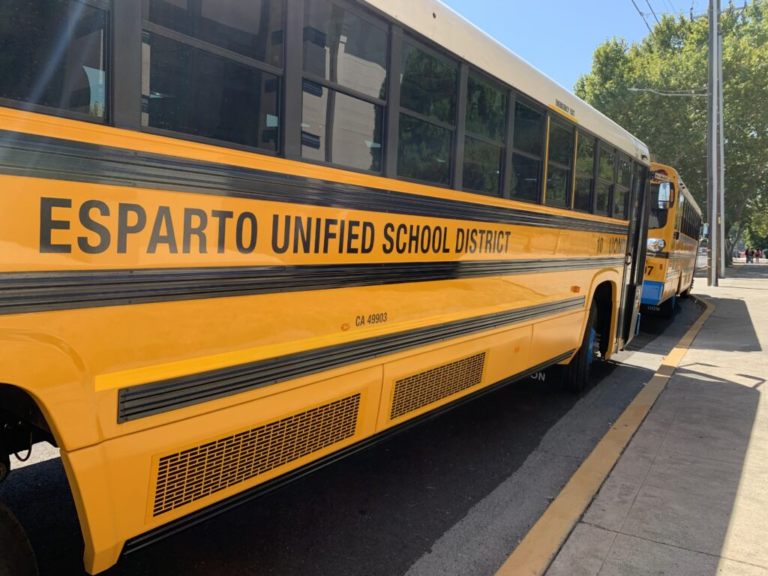
State schools in Orihuela Costa have school bus routes with designated stops. If a child qualifies for transport assistance and their route has been approved, the morning can be relatively civilised: take them to the stop, watch them meet their friends, and send them off on an air-conditioned bus.
No compulsory daily rally between home, school and work. At least, provided the available route works for your family.
One important detail: the bus doesn’t necessarily collect every child from their front door. However, the service is free and comfortable for eligible pupils.
Which Schools Should You Consider When Moving to Orihuela Costa?
Now for the practical part. Parents can get as sentimental as they like about school graduation ceremonies, but sooner or later they’ll open Google Maps and start looking for actual addresses.
Orihuela Costa itself has state primary schools and a secondary school. If you include the surrounding areas, the options expand to include private international schools. Here are the schools I’d start with when exploring the local education system.
CEIP Los Dolses: A School Where You Can Hear Dozens of Languages During a Single Break
This is where the story becomes difficult to invent deliberately.
In 2022, the Spanish television channel À Punt featured CEIP Los Dolses as a school attended by children of 58 different nationalities. In the report, the headteacher explained that some pupils could barely speak Spanish, while others knew only a few words. Teachers had to find creative ways to explain lessons and help children communicate.
Fifty-eight nationalities—that’s no longer an international day at school when children bring flags and traditional dishes. It’s an ordinary Tuesday.
One classroom might include children from families who have arrived from the United Kingdom, Ukraine, Scandinavia, Eastern Europe and dozens of other countries. They have different languages, habits and family histories. Some were born in Spain, like our son. Others have arrived quite recently and are still trying to work out why the teacher speaks so quickly and where the word they learned yesterday has disappeared to.
For a child who doesn’t speak Spanish, this environment can be a good opportunity to settle in among peers with similar experiences. They’re not the only newcomer trying to make sense of a new country. For children who already speak Spanish fluently, the diversity of their classmates becomes a normal part of everyday life.
There is another side to this, too. A multilingual environment requires additional work from teachers, and the school needs resources to support its pupils. This isn’t a magical system where language barriers disappear on their own. Even in 2022, the headteacher spoke about the considerable pressure on the school caused by the rapid growth in pupil numbers.
But there’s something wonderful about the idea itself. Children quickly discover that their classmate might speak another language at home, celebrate different holidays and eat something unusual for breakfast. None of this stops them from being someone they’d love to play with during break time.
Sometimes adults need much longer to learn the same lesson.
And Then the Children Cry at Graduation
There’s one family story I wouldn’t change, even to make the article more dramatic.
At our daughter’s primary school graduation, practically all the children were crying. They didn’t want to say goodbye to their teacher.
Not to their presents. Not to their classmates, whom they would see the next day. They didn’t want to say goodbye to the teacher who had accompanied them through such an important stage of childhood.
We’re used to evaluating schools through results, curricula, languages and prospects for further education. But that day, we saw another side of school life: an attachment to someone a child has spent so much time with that saying goodbye becomes genuinely difficult.
You can compare educational plans as much as you like. But if children genuinely love their teacher and don’t want to part with them, that deserves special attention.
And the strangest thing? Our children are happy to wake up in the morning and go to school. Not always, of course. We’re talking about children, not two employees of the month. But overall, they don’t see school as an unpleasant obligation they have to endure until the end of the day.
For us, that’s one of the most convincing results of all these years.
CEIP Playas de Orihuela | More Than Forty Nationalities, School Buses and Menus for Even the Pickiest Eaters
There is a particular category of parents who want to know everything when choosing a school. How is maths taught? How many children are in each class? Which languages are offered? Then, after enrolment, they discover that the most frequently visited pages on the school website are the timetable, canteen menu and school bus announcements.
CEIP Playas de Orihuela doesn’t disappoint in this respect. The school website publishes not only enrolment announcements but also comedor menus with separate options for children with different dietary needs. The October 2026 menu, for example, includes options for vegetarians and children with coeliac disease or allergies to dairy products, eggs, fish and nuts, as well as a separate menu without pork.
Let’s face it: parents would much rather discuss what their child had for lunch than conduct a nightly investigation called, “Why haven’t you eaten anything again?”
A School Where an International Environment Is Part of Everyday Life
An information document published by the school for the 2021/22 academic year stated that its pupils represented more than 40 nationalities.
For Orihuela Costa, this is a familiar story. Children grow up in families that have arrived from different countries and gradually find their place in a shared school environment. However, there is an important detail for parents who expect to receive assistance in English. The same document explicitly stated that official communication takes place in Spanish and Valencian, and that parents who need an interpreter for meetings with school staff should bring one.
This matters. An international student population doesn’t turn a state school into an English-speaking school. If your child is just beginning to learn Spanish, it’s worth finding out in advance what support they will receive and how the school helps newcomers settle in.
The Comedor and School Bus: Parents Benefit Too
In September 2026, the school announced that lessons start at 9:00 a.m. and that the school canteen operates after lessons. The bus follows established stops, with return journeys in September arranged after lunch.
For the 2026/27 academic year, the school also published information about applications for meal and school transport assistance.
This means you can clarify several practical questions in advance: whether the bus route suits your family, whether you qualify for transport assistance, and whether you can receive help with meal costs. The conditions depend on individual circumstances, so it would be wrong to promise free services to absolutely everyone.
What About the Summer Holidays?
The school has another interesting feature: CEIP Playas de Orihuela is among the schools where Orihuela’s municipal authorities have organised a summer school. The programme for summer 2026 included educational sessions and recreational activities for children.
For working parents, this may prove more useful than yet another colourful description of school facilities. The academic year ends, but parents’ work calendars don’t always end at the same time.
IES Playa Flamenca | Teenagers, Exams and the Moment Parents Stop Hearing Everything
Primary school is the stage when parents still know almost everything. Who is friends with whom, who got upset during break, who needs to bring cardboard, coloured paper and one more item whose existence you discover the evening before a project is due.
Then adolescence begins. Your child comes home, you ask how their day went, and you hear the universal answer: “Fine.”
Your information system temporarily shuts down.
IES Playa Flamenca is one of the main state-school options for families in Orihuela Costa whose children are moving on to secondary education. Pupils can continue their education after primary school and then choose an academic pathway or a vocational route.
More Than ESO: What Can Students Study Next?
The institute offers several educational stages and pathways:
- ESO (Educación Secundaria Obligatoria) — compulsory secondary education.
- Bachillerato de Ciencias y Tecnología — a pathway for students interested in natural sciences, mathematics and technology.
- Bachillerato de Humanidades y Ciencias Sociales — humanities and social sciences.
- Formación Profesional Básica en Servicios Comerciales — basic vocational education in commercial services.
- The education directory also lists intermediate- and higher-level vocational training courses. The availability of specific programmes should be checked for the relevant academic year.
The last point deserves attention. Not every teenager dreams of spending the next few years studying exclusively academic subjects before going on to university. Some prefer practical learning, a specific profession and a more hands-on pathway. The Spanish education system offers these options, although it’s important to understand the entry requirements and future opportunities in advance.
IES Los Alcores: A Spanish Secondary School for Children Who Have Outgrown Primary School
There’s a moment parents tend to put off thinking about: primary school comes to an end, yet their child continues to grow. And they do so without consulting the family budget or their parents’ plans.
Suddenly, it’s time to choose where they will study next.
IES Los Alcores is a state secondary school in San Miguel de Salinas. It offers compulsory secondary education (ESO) and Bachillerato, with different academic pathways for pupils preparing for further education or choosing a vocational route.
One interesting feature for families with teenagers is that the school offers more than the standard selection of subjects. Its educational programme includes additional classes to strengthen knowledge of core subjects, reading activities, foreign languages and a choice of study pathways in the upper years.
In other words, it’s an option for families who want their children to continue within the Spanish state education system without moving to a private international school.
There’s another detail worth mentioning. In May 2025, the municipality of San Miguel de Salinas welcomed participants in a school Erasmus exchange: German and Portuguese pupils who had come to discover the area and take part in educational activities. It’s a good example of how international connections can develop within an ordinary state school, too.
El Limonar International School Villamartín: British Education, Spanish Sunshine and a Bill That Requires Some Calculations
For a British family moving to the Costa Blanca, El Limonar International School Villamartín is one of the options that naturally makes the shortlist. Children don’t have to change their entire education system simply because their family has decided to swap British weather for the Spanish climate.
But that’s not even the most interesting part.
English for Learning, Spanish for Learning—and a Third Language on Top
ELIS educates children aged 3 to 18 and combines British and Spanish educational programmes. According to the school, until the end of Year 11, approximately 80% of teaching time is in English, while the remaining 20% is in Spanish. In Years 7–9, students begin studying a third language, choosing between French and German.
This means a teenager can study mathematics, natural sciences and other subjects in English while also following the Spanish curriculum. It’s particularly appealing to families who want to preserve a British educational pathway without raising their children entirely inside an English-speaking bubble in Spain.
In the upper years, students prepare for international IGCSE examinations and can then choose a combination of International A-Levels and the Spanish Bachillerato. The school prepares graduates for university applications in Spain, the United Kingdom and other countries.
For a family that doesn’t yet know where their child might want to study in five years, this is a significant advantage. Naturally, the final choice of programme depends on the individual student and the requirements of their future university.
From Age Three to Final Exams—All at One School
ELIS has four main stages:
- Infantil, ages 3–5 — early learning and a gradual introduction to the school environment.
- Primaria, ages 5–11 — primary education, British and Spanish programmes, a third language and individual student support.
- Secundaria, ages 11–16 — subject specialisation and preparation for IGCSE examinations.
- Bachillerato, ages 16–18 — preparation for further university study, with the option to combine British and Spanish qualifications.
Parents will particularly appreciate one convenience: children don’t necessarily have to change schools every time they move from one major educational stage to the next. They can spend a significant part of their school years here, maintaining a familiar environment and educational pathway.
Of course, moving between stages still requires students to meet the school’s requirements, and availability for the relevant academic year must be confirmed.
How Much Does a British Education Under the Spanish Sun Cost?
This is where family budgeting becomes particularly interesting.
The school’s official website publishes fees for the 2026/27 academic year. Tuition is charged over ten months:
| Age / Stage | Monthly Fee |
|---|---|
| Nursery, half day | €562.50 |
| Nursery, full day | €750 |
| Primary school | €805–880 |
| Secondary school | €985 |
| Bachillerato | €999 |
On top of this, there’s an admission fee of €1,500, meals costing €180 per month, and school transport costing approximately €150–190 per month, depending on the route. Meals are compulsory for pupils up to and including Year 11. Examinations, learning materials, uniforms and certain extracurricular activities may be charged separately.
Therefore, it’s important to compare more than just the monthly tuition fee. For a secondary-school pupil, the total cost will be considerably higher than €985 per month once meals, transport and other expenses are included.
Discounts on tuition are also available for families with several children: the school lists 10% for the second child, 20% for the third and 40% from the fourth child onwards. These discounts don’t apply to meals.
In other words, ELIS is an option for families prepared to pay for private international education and keen to understand the long-term educational pathway they are choosing for their children.
Who Should Consider ELIS Villamartín?
Above all, families who:
- want English to remain the main language of instruction;
- plan to maintain a British educational programme;
- want their children to learn Spanish at the same time and integrate into the local community;
- are considering university applications in different countries;
- are prepared to factor the cost of private schooling into their long-term family budget.
During the admissions process, the school may invite a child for a familiarisation day or assessment to determine whether their English level meets the requirements of the chosen stage. Admission also depends on the availability of places.
Our advice: don’t make a decision based solely on attractive campus photographs and a list of qualifications. Arrange a visit, speak to teachers, find out about the everyday academic workload and request a full breakdown of costs for the specific academic year.
Phoenix International School
Private international school · Near Orihuela Costa
Another option for families looking for a British curriculum. The school is located in San Miguel de Salinas, outside Orihuela Costa itself, but it’s worth including in your search if you’re willing to consider neighbouring towns. The school states that it educates children from approximately ages 4 to 18 and offers small classes.
I wouldn’t choose it based solely on the description on its website. It’s better to visit the school, speak to teachers and see how an ordinary school day is organised. That’s when you can really tell whether the atmosphere is right for your child.
What About CEIP Nº 20?
Orihuela Costa has also seen the arrival of a new state school, CEIP Nº 20. It’s important for local families because the population is growing and existing schools are coming under increasing pressure. The municipality has reported work on securing land for a permanent school building, so before submitting an application, it’s essential to check the school’s current status, address and admission arrangements.
New Castelar College International School
Some parents want their children to master Spanish. Others worry that English will gradually take a back seat after their children move to a Spanish school. New Castelar College offers an option for families who don’t want to choose between the two languages.
The school follows a model in which 50% of teaching is in English and 50% in Spanish. It combines the Spanish curriculum with the American AERO educational framework. Older students have the opportunity to obtain both the Spanish Bachillerato and an American High School Diploma.
But there’s something else worth noting. The school’s website lists a separate subject dedicated to happiness and personal development. New Castelar states that it became the first school in Spain to include such a subject in its curriculum.
Of course, it makes you want to ask: can parents sign up for it, too? Preferably for evening classes, after they’ve checked the homework, paid the bills and tried to figure out why their child urgently needs a piece of cardboard the size of a small door.
Additional opportunities include robotics, programming, chess, music, theatre, football, tennis and other activities. The school has its own canteen, swimming pool, medical service and language immersion programmes for children who need to improve their English or Spanish.
At the same time, I’d make sure to check the fees, admission requirements, availability of the appropriate educational stage and actual travel time from home.
What We’ve Learned After Twelve Years of Living Here
After twelve years, we’ve understood one simple thing: school life is about more than lessons. It’s about teachers children remember for years, friends they grow up alongside, and mornings when a child gets ready and heads to school without the need for a family board meeting.
For us, that’s probably one of the most rewarding results of moving here.
After all, at nine and fourteen, our children still have so much to discover about the world. And it’s a good thing when school becomes a place they go to not simply because they’re supposed to.